
 I have been laid up with a cold the past few days. This always gives me time to think and maybe read (when my eyes aren’t watering up). Many times I go back to books focused on composition. One thing I have noticed is that almost all the photography books I have on composition talk about compositional elements and then the emotional impact they may have on the viewer. For example, a book will have a section/chapter on lines (or shape, light, color, etc). The author typically goes on to say something like vertical lines create a positive uplifting response where horizontal lines create a more subdued or calming response. What if we reverse this and ask “What if I want to convey the feeling or sense of love, what should I do with respect to the compositional elements?”.
I thought I might try to list all the basic human emotions and overtime answer the above question for each. However, deciding what the basic list of emotions is not straight forward. Depending on the theorist, there are 2 (happy/sad) to 11 basic human emotions with many, many more secondary and tertiary emotions.
Here are my thoughts on some elements the photographer might use to communicate the feeling of love:
- Get in close to the subject – creating a sense of intimacy. Distance tends toward loneliness, remoteness, etc.
- Compression – a telephoto vs a wide angle would better convey a sense of closeness vs. distance and separation.
- Warm colors vs cool – red might be very passionate where yellow might be more just warmth. Blue and green (ocean and grass) tend toward a feeling of calm and coolness.
- Soft focus or light – accentuate the warm glow one may feel when in love. Sharp detail may feel harsh.
- Lines – the type of lines to used to communicate love may depend on the particular aspect of love – say the excitement of new love (straight or diagonal) or the steadiness of long standing love (curved or horizontal lines)
Those are just my initial thoughts. What comes to mind compositionally when you think of “love”?
Blog image: I find it hard to think about communicating love outside of human interaction. This image of mother and child says it all to me. Examining this image, it makes use of all of the above items.: tight intimate shot, closeness – 200mm lens, warm sepia tones and soft light. As for lines, there are strong diagonal lines giving this image an uplifting feeling.

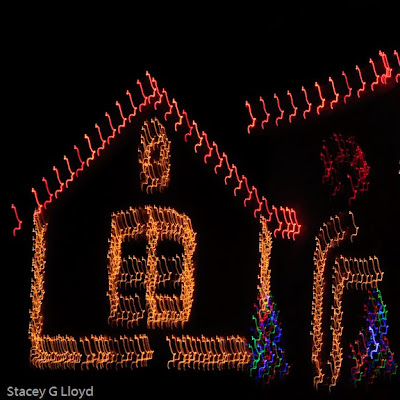
 I have been keeping busy with the many activities of the holiday season including getting ready for a busy weekend of Christmas and birthday parties. That is probably the case for many of you. As a result, I haven’t been out shooting new images so thought I would share this

 The Christmas tree lot image is a


 While varying all of these there still needs to be a consistent style and vision behind the portfolio – not always easy.

 I haven’t been inspired to write a lot this past week, but I did manage to find some late changing maple and oaks trees yesterday which allowed me to add to my Fall Immersion portfolio. Again for the first image I took advantage of morning back lighting to create wonderful colors and “brush strokes” . In the second image I used a slight scallop side movement to create the strokes.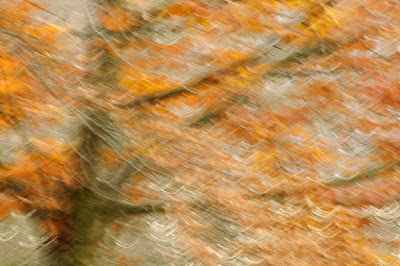
 I have been sick most of this week and so I haven’t been outside to grab the end of the fall season shots I had planned. Instead I have played a little in the office with things I have brought indoors for some close up work in the past weeks. Here are a couple shots of decayed Chinese lanterns taken on sheets of paper using a focused beam flashlight as the source. In the first shot the paper is actually white but taking advantage of the flashlights (and not auto-white balancing) inherent color I ended up with a very warm background. In both images I chose to go with diagonal shadows to create more dynamic images.


